What is the Difference Between a Cast Bronze and a Commercial Bronze Grave Marker?
 Jill Darby
For decades, families seeking to honor their loved ones with a bronze grave memorial had one option: cast bronze. Known for its timeless appearance and durability, cast bronze offers countless personalization opportunities and remains a dignified selection to this day.
The late 1990s, however, marked a pivotal shift. Trigard Memorials set out to revolutionize the grave marker landscape and introduced a new product line crafted from commercial bronze. These memorials, distinguished by their graceful aesthetics and impeccable finish, quickly gained popularity.
Understanding the difference between a cast bronze grave marker and a commercial bronze grave marker requires exploring their manufacturing processes, visual distinctions, innate properties, and more. In this blog, we will compare and contrast these two options. I will also highlight their unique characteristics and benefits along the way.
Manufacturing Process
Cast Bronze
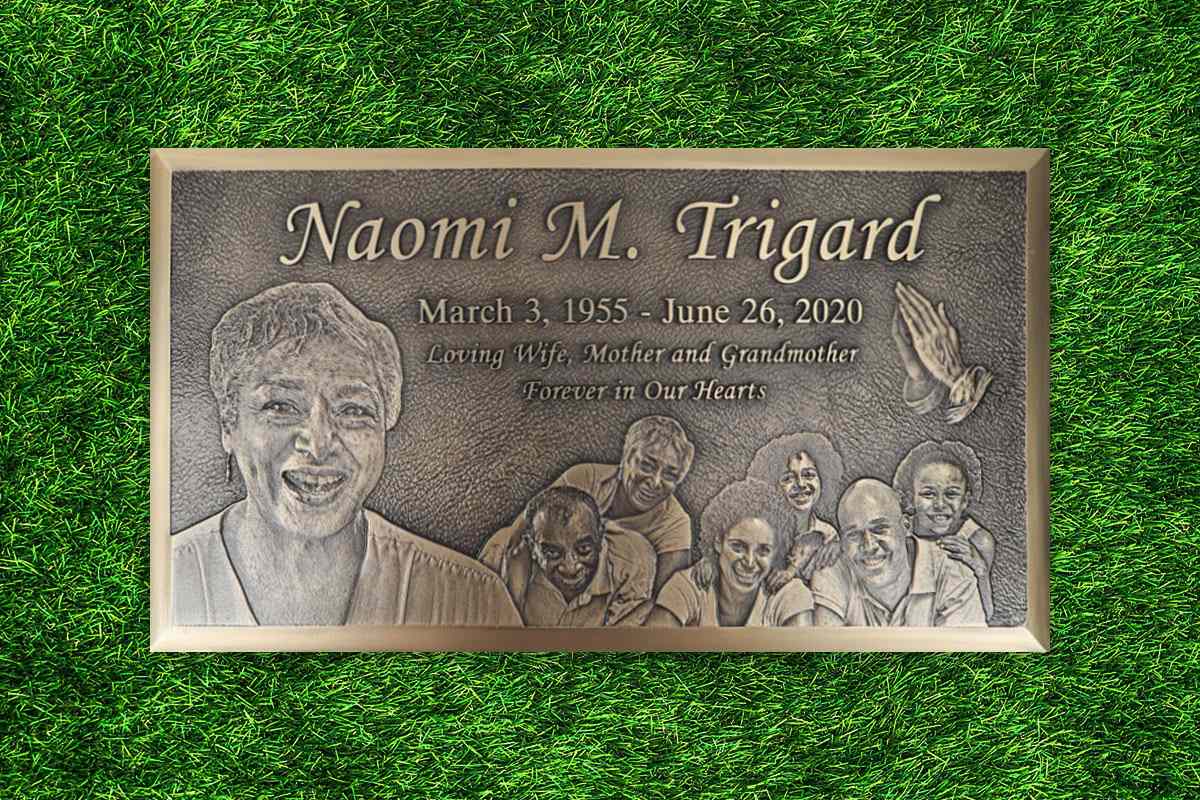
Producing a cast bronze memorial begins with pressing a custom pattern into a sand mold. The template encompasses the marker’s design elements including text, emblems, borders, and images.
Following the imprint, bronze ingots are melted into a liquid state. The molten material is then carefully poured into the mold, ensuring a smooth and even flow that fills every crevice. Afterward, the bronze is given time to cool and solidify before it is extracted from the mold.
Next, a skilled artisan uses a carving tool to chase around the letters and numbers, minimizing any imperfections and refining every detail. Upon completion, the memorial is transferred to a finishing department, where it is washed, painted, and sealed with a protective, clear finish.
Commercial Bronze
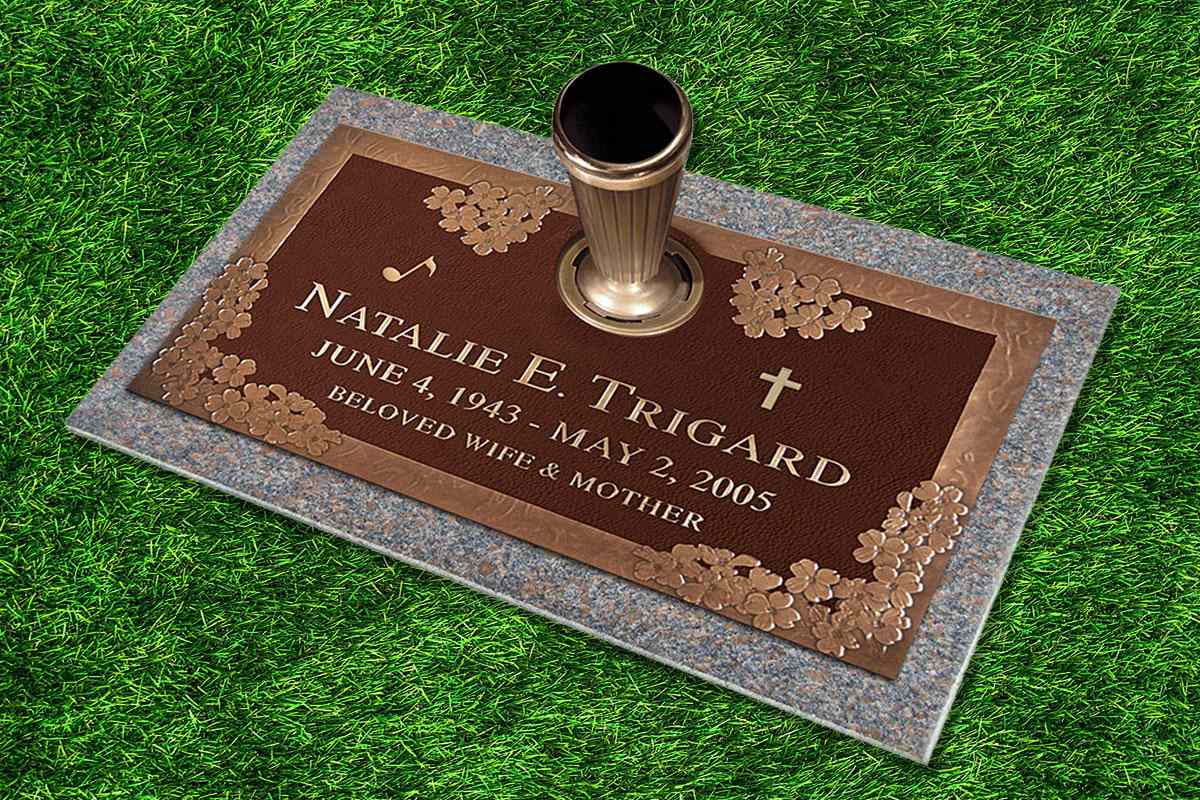
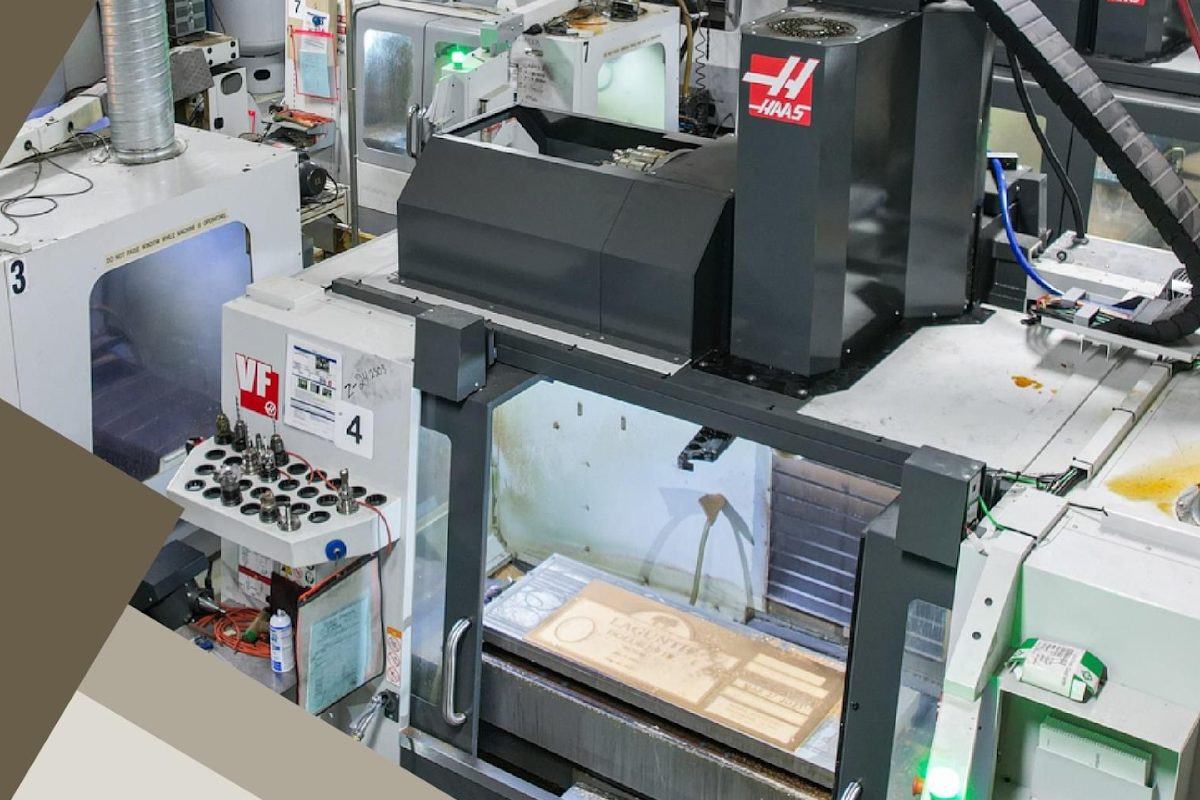
A commercial bronze memorial is meticulously crafted through a technique pioneered by Trigard Memorials called direct-to-metal machining. This sophisticated manufacturing method utilizes Computerized Numerical Control (CNC) machines to reverse-engrave designs onto flat sheets of commercial bronze.
The process was ahead of its time, as it incorporates three distinct types of software that work in conjunction with machining bits to systematically remove excess bronze. The design development is entirely computerized, relying on scanners and software such as Adobe Photoshop. This automation not only enables greater creativity but also facilitates easy modifications and ensures exact replication or even enhancement of images and photographs.
Once the design is finalized, it is imported into a surface-building software that maps out the memorial’s relief (the highs and lows) to create its surface. This data is transferred to the built-in machining software, which selects the optimal settings and calculates the number and depth of passes needed to achieve the desired relief. After the CNC machine produces the memorial, it undergoes a finishing process similar to that used for cast bronze.
Aesthetics
At first glance, a cast bronze grave marker may appear flawless, but a closer look will reveal minor imperfections. These blemishes are a byproduct of the traditional sand-casting process and the porous nature of cast bronze.
Many families appreciate these qualities, viewing them as adding character and serving as a testament to the manual craftsmanship that goes into the marker’s creation. The final product is truly a one-of-a kind tribute that boasts a natural beauty.
In 2023, Trigard Memorials introduced Traditions™, a selection of collage-style cast bronze markers with a choice of serene backgrounds to cater to the diverse preferences of families across the country.
As mentioned earlier, commercial bronze memorials are crafted through direct metal fabrication, which entirely bypasses the sand-casting step. This advanced technique ensures a well-defined surface, crisp text, and sharp imagery that stands out for its clarity and precision.
Since this process is completely automated, it eliminates the need for manual labor required to correct imperfections. Near perfect results are achieved in every memorial produced.
Installation
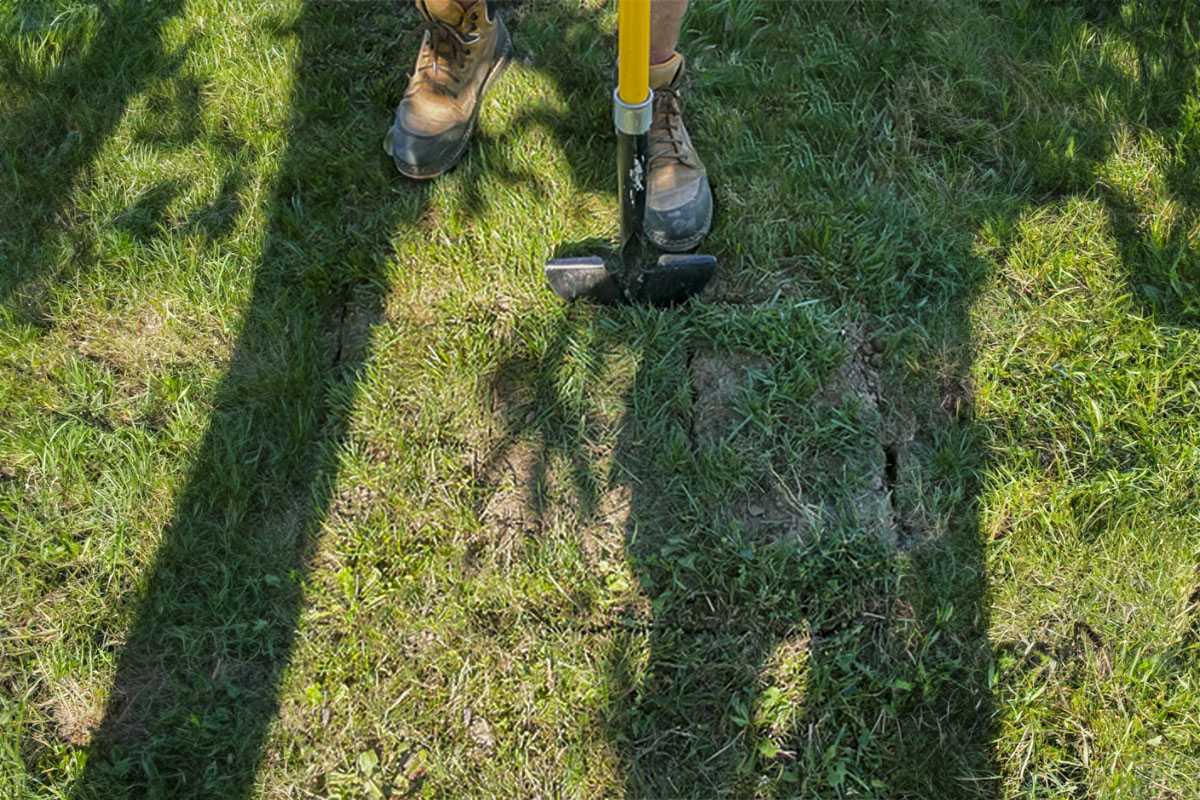
Most bronze grave memorials are gracefully affixed atop a granite slab that acts as a stable base. The rich color of bronze against the elegant granite creates a striking contrast. The way in which cast bronze and machined bronze markers are mounted to granite greatly differ.
A cast bronze features a concave back, forming a hollow cavity between the marker and the granite base onto which it is mounted prior to installation. This silhouette allows the memorial to flex slightly should heavy cemetery equipment pass over it during routine maintenance.
Machined bronze memorials, on the other hand, are engineered to sit flat on the granite base and lack the concave back of their cast bronze counterparts. This direct placement means there is no cushioning effect, or “give”. Cemetery grounds crew must take caution to ensure that a loved one’s tribute isn’t damaged.
Learn more about the grave marker installation process here.
Strength
A commercial bronze marker offers enhanced strength, a direct result of the manufacturing process of its raw material. Unlike cast bronze markers, which are formed in molds, machined bronze undergoes continuous casting to ensure a uniform shape and size.
Following casting, the bronze passes through a series of rollers so it can be compressed and elongated. The force applied by these rollers effectively removes trapped air pockets and imperfections within the metal. This densification results in a compact and homogeneous structure that is slightly stronger than cast bronze.
Enduring Tributes
Bronze, having endured for thousands of years, represents one of the most meaningful gifts a person can give to someone they love. Today, families have the option to choose between the traditional aesthetic of cast bronze and the modern appeal of machined bronze.
Before coming to an end, I would like to emphasize that both types of tributes offer permeance and timeless appeal. They each embody lasting qualities that transform them into works of art in their own right.

Jill Darby
Jill is a member of the Marketing Team and copywriter for Trigard Memorials and all affiliated Greenwood Inc. companies. She grew up in the funeral industry, as her family owned funeral homes in the Midwest. After graduating from Miami University, Ohio in 2003 with a Bachelor’s degree in Business, Jill worked in sales and customer relations for a global funeral product manufacturer. Her experience also includes merchandising, cemetery operations, and aftercare. Jill and her husband, Rich enjoy spending time with family, traveling, watching college basketball, and spoiling their 5 grandchildren.
2 responses to “What is the Difference Between a Cast Bronze and a Commercial Bronze Grave Marker?”
Leave a Reply
Wednesday, January 28, 2026
Thursday, November 6, 2025

Friday, October 31, 2025
Very informative I’m a cematary grounds men (3 years) I will certainly be looking closer at the difference in them. Thank you
Hi Ryan, Thanks for taking the time to read the blog and offer your feedback. I am glad you found it informative and am sur you do a great job as a cemetery groundsman. Take care, Jill