
9 Things to Consider When Purchasing a Grave Marker
 Jill Darby
Making arrangements for a loved one’s grave memorial is not something many people look forward to and can be a little stressful for some. However, visiting a cemetery and seeing a beautiful, personalized marker for the first time can make the effort devoted to selecting a meaningful marker seem every bit worthwhile.
If you will be purchasing a grave memorial in the near future and are unsure where to start, we put together some information to get you headed in the right direction.
Here are 9 considerations to help simplify the process and make it a little easier to narrow down your options.
1. Cemetery Regulations

Every cemetery has regulations pertaining to the style, material and size of grave markers permitted on their grounds. Maintenance, landscaping and aesthetics play a big role in determining these rules.
Before getting too deep into the selection process, you will want to make sure the cemetery permits the type of grave memorial you have in mind. Most cemeteries are laid out in sections, each of which have their own specific requirements for marker compliance. Don’t be surprised if a certain type of grave marker is allowed in one part of a cemetery but not another.
2. Where to Purchase the Grave Marker

Once a cemetery and grave space have been decided upon, the next logical step is determining where to purchase the marker.
Most cemeteries offer grave markers. Staff members have industry experience and know the ins and outs of the cemetery, making them well suited to provide families with guidance.
Purchasing a marker from a monument company is another viable choice. In addition to offering a variety of options, a monument shop’s staff is familiar with area cemeteries’ regulations and installation processes.
Many funeral homes offer memorials as well. Funeral directors have an established relationship with families and can be relied on to offer direction and recommendations.
A final option is to buy a marker online. Although convenient, this should be done with caution as it can be difficult to verify a company’s credibility. The lack of a showroom also prohibits consumers from seeing a product’s quality.
3. Affordability

The price of a grave memorial ranges anywhere from a couple hundred dollars for a small, basic marker to upwards of $20,000 for a high end option. On average, a marker will cost between $1,500 to $3,000. The exact price will depend on several factors.
- Size and shape of the marker
- Type and quality of material
- Customization selections
- Manufacturing processes
Having an idea of how much you plan on spending ahead of time will enable your salesperson to show you options that fit your budget and make the most use of your time.
Also, don’t forget to ask about any installation fees. Buying a grave marker is a significant purchase and you certainly don’t want to be caught off guard when it comes to cost.
4. The Deceased’s Preferences

Ideally, a conversation would have taken place between you and your loved one allowing you to record what type of permanent memorial he or she wanted as part of their legacy. Since the opportunity to have this discussion does not always present itself, you may need to put some additional thought into what style marker best represents the deceased’s life.
Customization offerings, which will be discussed later, are a great way to showcase the personality of the deceased in a way he or she would have appreciated. If the grave is located close to other family members, a marker of similar size, material and color would be fitting and likely found suitable by your loved one.
5. Material
Equipping oneself with some basic knowledge about a grave marker’s material is an important part of the buying decision. More than likely, you will be selecting from either a granite, marble or bronze memorial.
In order to make an educated decision and have long term satisfaction with your purchase, consider the following characteristics pertaining to the marker’s material.
- Resistance to scratching, chipping, and cracking
- Available color choices
- Legibility over time
- Necessary maintenance and care
- Sustainability against harsh weather
Being aware of the advantages and potential drawbacks will help ensure you remain pleased with the marker over time.
6. Inscription

A grave inscription, also known as an epitaph, is one of the features that makes a grave marker unique to the person being memorialized. The possibilities for inscriptions are endless. They can be religious, inspirational, or even comical. A loved one’s military service, occupation, and pastimes can be represented in the epitaph as well.
A salesperson can certainly make suggestions based on inscriptions other families have chosen. However, if you desire a more creative epitaph, you should prepare some ideas in advance. When doing so, be sure to factor in the length of your epitaph in relation to the size of the marker you are interested in purchasing.
8. Customization
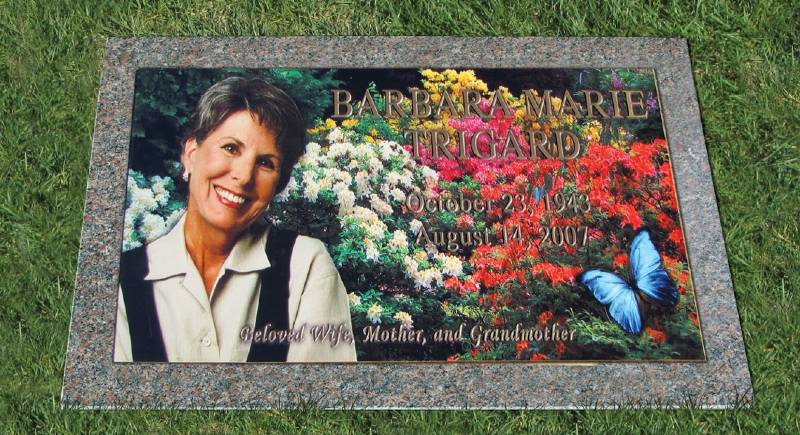
Customizing a grave marker is a great way to make it a one-of-a-kind tribute that will stand out amongst others.
Emblems are the most standard form of customization and there are literally thousands to choose from. Some of the more popular ones are doves, crosses, angels and praying hands.
The grave marker’s material often dictates the customization opportunities. Laser etching can be used to create a portrait or other illustration on granite and marble markers. Additional selections for such markers include back surface and shape carving as well as specialty and hand tooled lettering.
For families who choose bronze markers, their loved one’s likeness can be represented using an oxide or full-color picture. Works of art turned into custom backdrops and photo collages can further enhance the personalization features. Full-color photo medallions can be mounted on grave markers made of any material.
9. Cremation Grave Memorials Versus Standard Grave Markers

Many grave memorial providers offer cremation grave markers. These offerings may be similar to a standard marker in terms of style and have the same customization offerings, but will generally be smaller in size. As a result, they are usually less costly.
It is important to check the cemetery’s rules and regulations to see if they have specific requirements for cremation grave markers. Some cemeteries even have dedicated areas of the cemetery, called cremation gardens, where individuals who choose cremation can be buried.
Final Thoughts
Funerals typically take place within a week of a person’s passing and families must quickly prepare for the ceremonies. They must gather photos and other memorabilia to display, select music and readings, and choose a casket as well as a burial vault.
The beauty of picking out a grave marker is it doesn’t have to be done right away. While you don’t want to wait too long, it is perfectly acceptable to take a little extra time to ensure you are pleased with the decision.
Don’t hesitate to visit a cemetery or two to find inspiration and get ideas. If you aren’t comfortable carrying the entire weight of the decision, feel free to obtain opinions and recommendations from family members and friends.
Purchasing a marker is a significant decision and not one that should be taken lightly. A grave memorial is so much more than a landmark with a name and set of dates. It symbolizes a unique individual who lived on this earth and impacted the lives of those who crossed their path.
Educating yourself about the selection process and giving thoughtful consideration to your choices will result in an unforgettable final tribute to a loved one.

Jill Darby
Jill is a member of the Marketing Team and copywriter for Trigard Memorials and all affiliated Greenwood Inc. companies. She grew up in the funeral industry, as her family owned funeral homes in the Midwest. After graduating from Miami University, Ohio in 2003 with a Bachelor’s degree in Business, Jill worked in sales and customer relations for a global funeral product manufacturer. Her experience also includes merchandising, cemetery operations, and aftercare. Jill and her husband, Rich enjoy spending time with family, traveling, watching college basketball, and spoiling their 5 grandchildren.
Leave a Reply

Tuesday, May 26, 2026

Wednesday, January 28, 2026

Thursday, November 6, 2025
Share this post!
Facebook Share Twitter Share Pinterest Share LinkedIn Share